High on Life and life
For three days, I have been struggling to find a subject to write about, and then getting stuck writing about things that are much too complicated for my meager skills, and effortful. I was placing the bar too high; a habit I often have. Writing about myself is comparatively easy, and here we are! I'll throw you, my most cherished reader, down the deep end of this short article:
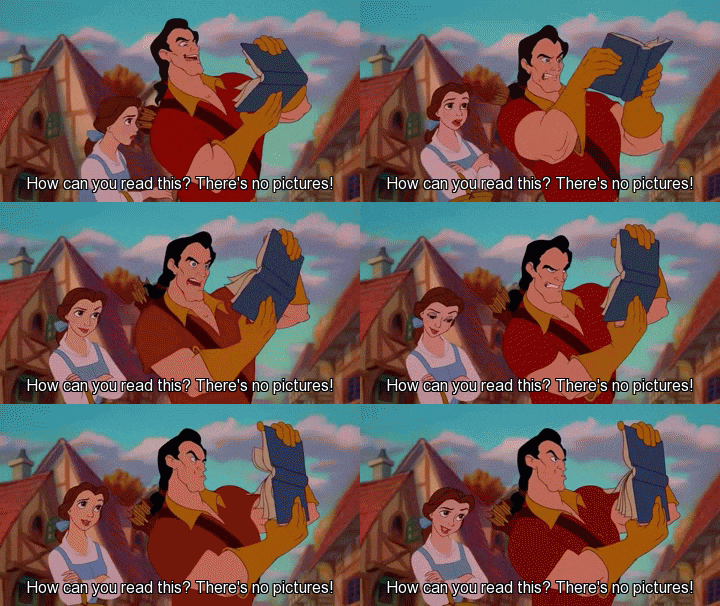
Lately, my mood has been more down, and I often find myself completely existentially exhausted in the evening (and only slightly less so during the day.) Many things have changed in my life in recent history, not externally but internally, and they've brought this on me. I managed to quit my addiction to reading fiction a few months ago, and have mostly stopped watching YouTube, or checking Discord every ten minutes. These things used to take up my evenings; now, there's only me, myself and I.
In tandem, the way I look at the world has also changed. Not my values per se, they've stayed consistent for many a year on paper, but my acting on them and caring about them. It's exhausting to care, you know? I'm sure you know. I've much more time to think now. Much more time to feel exhausted. Much more time to pay for years of excess consumption and escapism, of eighteen-hour reading sessions only interrupted for a YouTube-accompanied meal.
In order to try and influence my mood in the right direction, I picked up High on Life, a book by David JP Phillips (and not the video game by the same name.)
High on Life is surprisingly good. It relies less on the hallmark inspirational-story-of-a-successful-person trope than the average book in the genre, though it still has them aplenty. It's themed around physical aspects of the human body, hormones and neurotransmitters, and not just inspirational stories and thou-shalt-do-this-and-that. The book first initiates you to these six hormones, what they do and various ways to trigger them, and then has some general life advice in part two. These are the hormones:
- Dopamine
- Oxytocin
- Serotonin
- Cortisol
- Endorphins
- Testosterone
I've read the book once before, around a year ago. I didn't always read fiction; a few dozen self-help books have gone through my hands over the years too. This was one of them, a more recent entry. It's a nice change from reading Stoicism-adjacent books, like the writings of Ryan Holiday. With my mood being what it is, I decided to pick it up again.
I admire people who read self-help books occasionally, because they care, though perhaps, like me, not enough to persistently change their lives. (Did that sentence have enough commas?) If you consume the genre often, I'm sorry: You've fallen right into their trap.
Some people seem disappointed on the High on Life Goodreads page, calling the book basic. Maybe you got the same idea from my little summary above. To them I say: You're totes right, but is there a self-help book that isn't basic? There's nothing in these books you haven't heard somewhere before. The point is the reminder, and being told the same thing in many different ways, hoping it will stick this time. Because it turns out, living a happy life is mostly a solved affair.1 The problem is that we don't really care, or rather, we often don't want to do the things that would work. When we do eventually change, the books will have helped, but the catalyst was something else.
Back on track: I can recommend the book. I haven't finished my re-reading yet, but I will soon, and if you haven't read a self-help book this month yet, maybe give it a try too. Skim through it if you'd like; no pressure.
Thank you for reading. Send me an email if you'd like to chat! I always respond, and would love to hear from you. If you want, recommend me a few books. I'm looking for new things.2 Something a bit more advanced than this, but maybe not too much, or something completely different.